UttaraPedia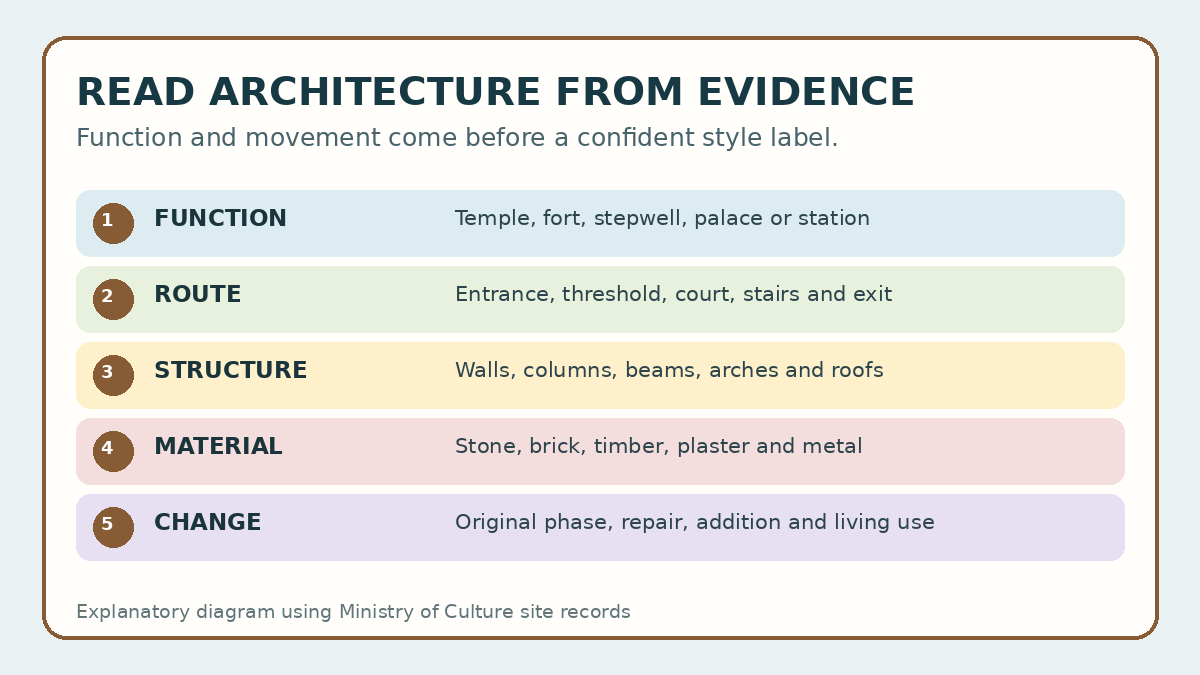
India में किसी old structure के सामने खड़े हैं। “Ancient temple” या “Mughal building” जैसे quick label से आगे कैसे देखें? जो evidence सच में दिख रहा है उससे शुरू करें: building का purpose, plan, material, water system, movement route और later additions। Style names basics clear होने के बाद ही useful होते हैं।
पहले पूछें place किस काम के लिए बना
Temple, mosque, palace, fort, tomb, stepwell, market, gateway और railway station अलग problems solve करते हैं। Function plan को shape करता है। Fort movement और defence control करता है; stepwell water तक access बनाता है; temple sacred space और ritual movement organise करता है। एक complex में कई functions हो सकते हैं, इसलिए whole site के बजाय जिस part का description है उसका नाम लिखें।
Space के through route trace करें
Entrance, threshold, courtyard, corridor, stairs, central chamber और exit देखें। Visitors एक axis पर, shrine के around, water की तरफ नीचे या successive gates के through जाते हैं? Route architecture को distant front photo से ज्यादा clearly explain कर सकता है। Pattern पूरा करने के लिए restricted area में enter या wall पर climb न करें।
Structure और decoration अलग देखें
Columns, beams, arches, vaults, domes और load-bearing walls building को stand करने में help करते हैं। Carving, inlay, painting, screens और mouldings surface और meaning बनाते हैं। Richly carved panel यह नहीं बताता roof कैसे supported है। Joins, spans और wall thickness देखें; repair से visible material बदल भी सकता है।
Material और climate साथ पढ़ें
Stone, brick, timber, lime plaster, metal और earth अलग behave करते हैं। Deep shade, courtyards, screens, sloping roofs, drains और raised plinth heat, rain, snow, dust या water के response हो सकते हैं। हर feature का एक ही cause claim न करें; ceremonial, practical और aesthetic choices overlap कर सकती हैं।
Official examples से अपनी reading test करें
Ministry of Culture Rani-ki-Vav को seven-level stepwell बताती है जो inverted temple जैसा है और water की sanctity पर जोर देता है। Red Fort page red sandstone walls, connected pavilions, gardens और traditions के fusion को note करती है। Great Living Chola Temples towering vimanas, sculpture, engineering और continuing worship से पहचाने जाते हैं।
ये examples दिखाते हैं कि function, movement, material और living use साथ पढ़ने चाहिए।
Date और change check करें
Monument अलग periods में built, expanded, repaired और repurposed हो सकता है। Information board original phase को later gateway या restored surface से अलग कर सकता है। Exact site name और protected boundaries पढ़ें। Broad dynasty label को precise date न बनाएं जब तक official interpretation support न करे।
Six-note field method
- Exact site और structure name लिखें।
- Main function note करें।
- Movement route sketch करें।
- Visible structural systems और materials list करें।
- Decoration अलग record करें।
- Style या period name करने से पहले official source check करें।
Short example के लिए हमारी Jageshwar temple-cluster story देखें, फिर correct site record खोलने के लिए Ministry of Culture heritage list use करें। Destination में कई structures हों तो हर one के लिए separate note बनाएं। अगला useful step ten style labels याद करना नहीं; six notes से एक evidence-based paragraph लिखना और uncertain claims को verification के लिए clearly mark करना है।