UttaraPedia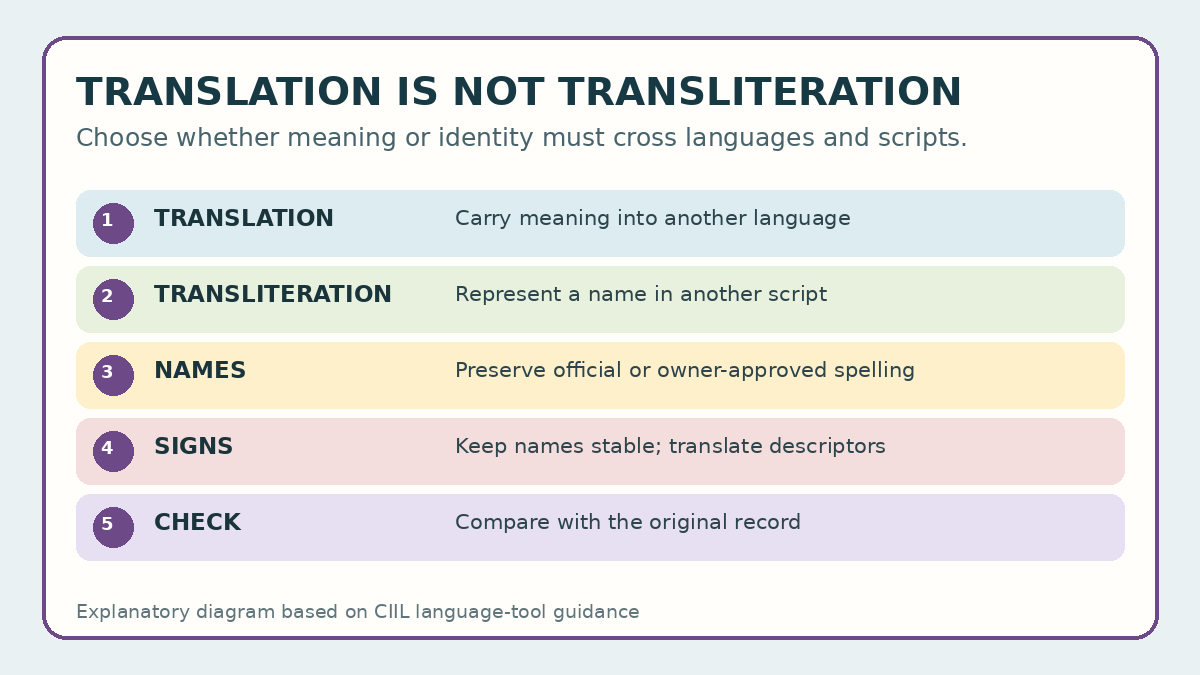
Sign पर Roman letters में “Rajpath” लिखा है। Translator इसे English phrase बनाए या same name को दूसरी script में लिखे? Proper name को अक्सर translation नहीं, transliteration चाहिए। Translation meaning को languages के बीच ले जाता है; transliteration sound या written form को दूसरी script में दिखाता है। दोनों को mix करने से names, addresses और search results बदल सकते हैं।
Translation language बदलता है
“Railway station” को Hindi में translate करते समय same meaning वाले Hindi words चुने जाते हैं। Sentence order और grammar बदल सकते हैं। Good translation audience के लिए natural पढ़ना चाहिए, source के हर word की mechanical copy नहीं। Context जरूरी है: river का “bank” और financial bank same नहीं हैं।
Transliteration script बदलता है
Transliteration किसी name या word को दूसरी writing system में represent करता है। “Almora” और “अल्मोड़ा” Roman और Devanagari scripts में same place name की तरफ इशारा करते हैं। यह Almora के meaning की word-for-word explanation नहीं। Personal names, station names, addresses और searchable terms में transliteration खास useful है।
एक sound की कई Roman spellings हो सकती हैं
Indian names की हमेशा एक universal Roman spelling नहीं होती। Long vowels, retroflex sounds और श, ष, स जैसे letters अलग schemes में अलग लिखे जा सकते हैं। Practical rule यह है कि identity documents, tickets, signs और directories के लिए official या owner-approved spelling रखें। किसी person का name सिर्फ इसलिए “correct” न करें कि दूसरी spelling ज्यादा phonetic लगती है।
Script और language same नहीं
Devanagari एक script है जिसे Hindi और कई दूसरी languages use करती हैं। Roman भी script है, जबकि English और Hindi languages हैं। Font letters का visual design है। यह difference तब important है जब tool source language, target language और transliteration अलग पूछता है। Hindi language select करने से system को automatically यह नहीं पता चलता कि name की कौन-सी Roman spelling चाहिए।
Tools को draft की तरह use करें, फिर check करें
Central Institute of Indian Languages Anuvadika को translation, transliteration, language detection, speech recognition और speech output combine करने वाला platform बताता है। Combination useful है, लेकिन language detection गलती कर सकता है और names को human confirmation चाहिए। Important output को official sign, document, dictionary या name owner से compare करें।
Four-question editing check
- यह proper name, general word या full sentence है?
- Meaning को language बदलनी है या sound identifiable रखना है?
- क्या official spelling पहले से use हो रही है?
- क्या reader को new script के साथ original script भी चाहिए?
Bilingual sign में names stable रखें और descriptive part translate करें। जैसे site name transliterate हो सकता है और “entry gate” translate। Postal label या ticket में approved identity spelling exactly match करें। Learning note में दोनों scripts दिखाएं और pronunciation अलग explain करें।
Language, script और font guide foundation देती है। CIIL Anuvadika में draft try करें, फिर important names original से verify करें। अगला useful step: editing से पहले हर phrase पर T यानी translation या TL यानी transliteration mark करें; यह छोटा decision कई confident-looking mistakes रोकता है।